Wednesday, March 13, 2013

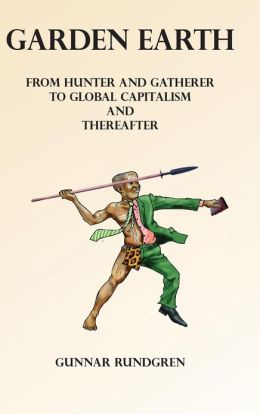
Web site for Garden Earth - the book


From now on, information about the book Garden Earth will be posted on the web site, http://gardenearth.info/en/


Below, you can read the concluding short chapter of the book.

33 –
Garden Earth
You may say that I’m a dreamer
But I’m not the only one
I hope someday you’ll join us
And the world will live as one
(John Lennon, ‘Imagine,’ 1971)
Hunters and gatherers lived in a wild nature, although they manipulated it more than most are aware. Their values, religion and society were shaped by their environment and ecological niche. A small fraction of the primary production of ecosystems was taken care of by human beings. With agriculture, it all changed. A part of nature, gradually growing, was occupied fully by the human species, cleared from undesired species and put directly, and uniquely, in our service. In this way, we maximized our share of the biological production, and favoured those species that produced what we needed. Because of more intensive use, buffers were smaller and agrarian society was thus vulnerable to disturbances and shocks, such as climatic events, disease of crops and animals as well as of ourselves. Soil erosion was an ever-present threat and a cause of societal collapses or simply slow decline. Our relationship changed not only with nature but also with each other and with the society that was established to manage this new system. Human society changed from a basically egalitarian society of small bands to agglomerations of authoritarian lordships, kingdoms and empires, and from a society with very limited division of labour to a stratified society where each had his or her well-defined role.

With the Industrial Revolution, based on fossil fuel, human control and reach expanded even more, to almost all nooks and corners of the globe. Humankind went further, climbed and flew higher, dived and dug deeper—all in the effort to find more resources to exploit. More and more parts of the living as well as the dead were put in direct service of humanity. Industrialism also brought new impetus to farming. The first stage brought tools and the power to extend the land under plough, but gradually also more and more machinery to in¬crease productivity per labourer. This was stimulated by an increased use of fossil fuel so that farming from being a net producer of energy became a net consumer. Chemical fertilizers, extracted, manufactured and shipped from far away, were a step towards freeing agriculture from the limitations of the site, to manipulate life processes. These changes were also accompanied by increased use of pesticides and medicines. Now, when the rich supply of genes in nature doesn’t suffice, or there are natural barriers for combining them as desired, genetic manipulation is used.

At the same time as we are dependent on more and more of the bio-geosphere, people live lives increasingly more distanced from it. The warmth doesn’t come from wood that we cut in forests, but from distant power plants, district heating or oil and gas pumped from far away. We rarely touch the soil; the green plants most touch are retarded, tamed and flower-induced pot plants, if they are not plastic. We rarely feel the hot wind on our cheek, the rain in our hair or the bitter cold in our marrow. Still, we are more dependent on nature than ever before. Nature doesn’t care for humankind because it will survive well without it, but humankind has to care about nature.

Modern society has been successful in delivering personal wealth and economic growth, for a few people, that is. It has also broken down old prejudice and expanded human rights, freed people from bonded labour and other oppressive institutions. It has come a long way in ending discrimination of women and other groups often victimized, and been extremely successful in producing more things for the health, comfort and joy of human beings. The system, however, has not been successful in replacing the old system with a new one that gives people a feeling of meaning. Personal wealth and growth have become ends in themselves to such an extent that they remind of cancer.

The economic system and society have reached a critical limit through population explosion, unscrupulous and reckless exploitation of natural resources and constantly increasing energy use. For some resources, the limits have been passed already, which puts increasing pressure on societies, the global community of human beings and the foundations for human existence. We hunt for more and more things and satisfaction through consumption; the enormous choices haven’t made anyone happier. Unprecedented wealth is created, but it has not spread to most citizens of the world, despite everyone living in the same global economy. The gap between the rich and the poor is widening. Despite constant increased productivity leisure time doesn’t increase; contrarily, one’s leisure time and private sphere are invaded by the capitalist paradigm and behaviour patterns—to consume becomes a compulsion as strong as to work.

The capitalist system is a system of colonization, bent and suitable for geographical, physical and economic expansion. Society has now reached a stage of saturation; there is nothing left to colonize. The behaviours that were appropriate or at least acceptable for a species in rapid expansion are not the ones suitable for a life in balance. In some ways humanity seems to adapt to it—how else would one explain population ceasing to grow in developed countries? Organic farming, passive heating, electrical bicycles and solar energy represent technological developments better adapted to ‘householding’ societies with regenerative economics. The wild finds new ways of cohabiting with human beings and human beings find new ways of interacting with the wild. Cooperation within civil society has increased tremendously globally and is revived locally. There is a shift in values, where more and more people want to jump off the treadmill and seek that which gives ‘real’ well-being. This maturity is reinforced by the population ageing. The values of older people are adverse to risk and expansionism, and are more reflective and caring.

In the discussion about growth and limitations for human use of natural resources, it should not be forgotten that the poorest third of humanity needs to increase its use of natural resources, while the rest of humanity takes a break and enjoys life. This increased use is certainly not decoupled from direct exploitation of resources; it is the development of very real things such as electricity, houses, roads, water and sewage. Still, many old and new technologies can be deployed to make this growth less wasteful than previous modernization; these technologies include solar energy, distributed power, separation of water toilets from other water use, or buildings made from adobe, etc.

Most people have not yet realized the extent of the change required; humankind needs a completely new economy, a new society. Another society has to be built on values and conditions other than those of the capitalist society. It is a society oriented to closing gaps—gaps between people, between man and woman, between ruler and ruled, between ‘we’ and ‘them’, between one country and another and between man and nature. It is about unifying the many divisions that currently exist—division of labour, division between production and consumption, between work and leisure, between the individual and society, between economy and society and between beauty and efficiency.

As an alternative vision to the capitalist ideology, I offer Garden Earth.
  • Where capitalism sees self-interest as the major human driver, Garden Earth is built on human needs satisfied in many ways and with voluntary cooperation.
  • Where capitalism is based on private property, the foundation for Garden Earth is stewardship of common resources.
  • Where capitalism sees nature as commons free to exploit, to mine and to use as a dumping ground, Garden Earth sees nature as our home.
  • Where capitalism sees specialization and division of labour as something very good, Garden Earth sees it as a potential evil, a risk that needs to be limited and its effects on individuals and society mitigated.
  • Where human energy in capitalism is used for salaried labour that a few profit from, in Garden Earth people work for their satisfaction and for doing something for the community.
  • Where technology in capitalism is developed and chosen to maximize some peoples’ profits, in Garden Earth it is selected to make life more enjoyable or transcend resource limitations.
We need each other and the existing form for our cooperation is what is called society or community. It is ruled by laws of nature, ecological conditions, human laws, norms inherent in our culture and values. The human being is part of society and vice versa. The well-being of humankind and society is intricately intertwined forever. Markets, the state, civil society and the private have roles to play in the future society. It is about expanding liberty and the notion of liberty to include also the capabilities of the individual and to resolve the false contradiction between the freedom of the individual and that of society.

We simply have to go back to the Garden of Eden. But we can no longer do so as the hunters and gatherers who were driven out. Humankind is no longer equal to the giraffe, the carrot or the sheep, even less to the stone. Man is part of nature; thus, the well-being of human beings and of other species is intertwined. Because of the numbers, intelligence and development of the human species, we have a special responsibility for the survival of other species and for the relative stability and productivity of the earth’s ecosystems. Whether or not we like it, the survival of not only the human species but also many other species is in the hands of the human being.

Lagom is good enough


Lagom, a Swedish word, is perhaps a key concept for a really sustainable society.  According to popular but contested folk etymology, it is a contraction of "laget om" ("around the team"), a phrase used in Viking times to specify how much mead one should drink from the horn as it was passed around so that everyone received a fair share. The closest you could come in English would be: just right”.

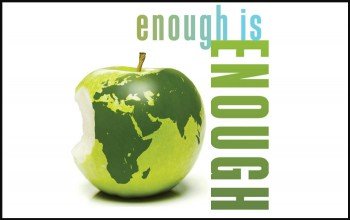
Rob Dietz and Dan O'Neill authors of Enough is Enough, take on the task of how to build a sustainable economy in a world of finite resources. They say, ”Perhaps the most important number is one - one single blue green planet with finite resources that we all must share”

Enough Is Enough: finally a book of practical solutions to restore your hope!The book is well written and the arguments are convincing. Apart from all the facts in the book, each chapter has an introductory story with a nice personal touch. Contrary to most books in the genre, Dietz and O'Neill spend more pages explaining how a no-growth economy would look like rather than why perpetual growth is neither possible nor desirable. They do both jobs well.

Both authors are affiliated with the Center for Advancement of the Steady State Economy (CASSE). And “steady-state-economy” is the term the center use to describe a no-growth economy. They do ask their readers to come up with a more catchy and sexy term. However, trying to change the world is very different from selling soap, and I believe we underestimate people when we assume that we have to sell” them a catchy phrase.

In the first part of the book, Dietz and O'Neill debunk the ideas of decoupling” and trickle-down economics”. They do that well by providing a number of facts. For example, for every $100 of economic growth, only 60 cents reach the billion poor in the world. This is based on a report from the New Economic Foundation, available here. Clearly this is a decidedly inefficient way of distributing wealth. As they state: someone is profiting from economic growth, but it is not the world's poor.”

There are a number of interesting observations or ideas discussed in the book. For example:
·      Just as several aspects of our current society have all reinforced each other—for example, population growth, competition, cheap oil and technology; crisis situations also have such self-reinforcing sides. The authors point out that we should expect such cascading effects in the process of building a steady-state economy as well.
·      The best ways to achieve well-being are those that take time, consume none or few resources, and are for free.
·      The purpose” of the financial sector is to facilitate and intermediate between business and investment, and the costs for this is a burden to the rest of the economy. The fact that the financial sector takes an ever increasing share of the economic growth is not a sign of health or of any improvements in our livelihoods.

In parts two and three of the book, Dietz and O'Neill outline the strategies of reaching a steady state economy (part two) and the actions to be taken (part three). Both parts of the book are very interesting. One can also see that here the authors, self admittedly, are in unchartered territory. This is reflected in some redundancy and a vague division between parts two and three.

They call for changes on a number of strategically selected institutions in our economy and attitudes in our society. In their opinion, investments should generate social and environmental returns instead of financial returns; labor productivity can be perused to reduce and minimize unpleasant work, but not to take away jobs that bring joy and meaning; new forms of ownership (e.g. social enterprises) need to be developed and some existing forms (e.g. cooperatives) need to be revitalized instead of us being stuck in the choice between private and public; and finally we need to rethink our relationship to nature. They refer to these four thoughts as the foundation” of a steady growth economy.

In their opinion, ten pillars of policy directions” are needed. They include:
1.     Limit resource use and waste production
2.     Stabilize population
3.     Distribute income and wealth equitably
4.     Reform monetary and financial systems
5.     Change the way we measure progress (goodbye GDP)
6.     Secure full employment (by job-sharing and guaranteed jobs)
7.     Rethink how businesses create value
8.     Replace the culture of consumerism with a culture of sustainability
9.     Stimulate political debate about limits to growth
10.  Change national goals regarding growth and improve international cooperation

With these “pillars” in place, we can move towards a society that is sustainable and equitable and where human well-being is the centerpiece of life. Dietz and O'Neill present an appealing vision of how such a transformed society could look like.

Such a transition will require changes in institutions, laws, constitutions, attitudes and distribution of wealth. I find that the book mixes “hard” and soft” factors (see the list above) in a not so clear way. In fact, for the soft factors there is often no path on how to get there. It is one thing to say that we want more equality. There is, I believe, already a broad public agreement on this, but still differences are forever increasing. This example shows that there is a fundamental need to re- distribute assets and not just to change attitudes.

Like many others, the two authors question the use of GDP measure. “What is measured is managed” the saying goes and the authors concur, but I am not very convinced by that argument; we have measured poverty or unemployment for decades, we still didn't get rid of it. It is not because Chinese leaders have decided on a number and being competent, they have a GDP growth of 9 percent; similarly, it is not because European leaders do not have sufficiently ambitious growth targets (on the contrary they have very ambitious targets which they never reach!) that their economies stumble a percent or two over decades.

In real life, the mechanisms that drive growth are rarely related to the measurement of GDP. Politics of the normal kind hardly affect GDP growth in the medium and long-term, because it is mainly the acts of corporations, the effects of technology and energy, and the growth, age and behavior of populations that determine what kind of growth we will have. In the very short term, governments can influence growth by introducing tax cuts, subsidies or austerity measures etc. The key economic agentscompanies and consumersdon't care about GDP. Companies don't invest, expand or make profits or losses with an eye to the effects of the GDP. And consumers don't buy flat screen TVs to boost the GDP. Some of the most spectacular periods of economic growth occurred before there were any GDP measurement and public GDP targets.

By all means, do away with GDP; it is a rather meaningless measure. However, don't expect that to change too many things. And therefore don't put your bets on alternative measures either. They do play a role visualizing certain developments and they are therefore good to develop, but they are no game changers.

The weakness of the book is, in my view, that the authors don't address how to change the logic of property, profit (and other forms of capital accumulation) and competition. They write A key question, then, is whether the profit motive is compatible with a non-growing economy”. In another part they say that higher labor productivity is almost always converted into higher production because business owners are beholden to profit motives. Although they do see the problems, their prescriptions fall short of addressing them. The book discusses the enormous gap in wealth in the world today, where 50 percent of the world's population shares 1 percent of global wealth. But there are no proposals in the book that will turn this around.

I look forward to the next book by Rob Dietz and Dan O'Neill where they advance their ideas further. They are on an important track: Enough is Enough is indeed good enoughLagom!

You can read the authors introduction to the book here.

Tuesday, March 12, 2013

Are voluntary standards efficient tools for changing the world?


When you buy a cup of coffee for €2 the farmer gets 3-4 cents for the coffee in that cup. If you buy a cup of organic and fair trade coffee you are likely to have to cough-up €2.50 - and the farmer will get 4-5 cents. This example shed some light on three circumstances.
1. How little share of the economic value in today’s food chains that is constituted of the raw materials.
2. How little share agriculture has in the GDP of the rich countries - often just a few percent
3. That the market mechanism may not be particularly efficient in transforming consumers willingness to pay for direct or indirect services or values in a product to an increase in income for producers.

Hear a presentation I made at the recent Biofach fair in Nürnberg.

Sunday, March 10, 2013

Money does grow on trees


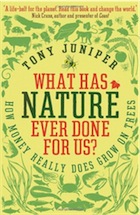
Vultures can clean up a cow carcass in minutes, leaving only bones. In India, considering the resistance for eating cattle, most cows have historically been eaten by vultures. At a certain point, however, vulture population collapsed from some 40 million to just a fraction.  Dead cattle were left to rot with disastrous effects. "There was an explosion in the population of wild dogs," says environmentalist Tony Juniper. "More dogs led to more dog bites and that caused more rabies infections among people." The disease killed thousands and cost the Indian government an estimated $30bn, he adds.The cause for the drop in number of vultures was that Indian farmers began using a new anti-inflammatory drug on their cattle. Traces proved to be lethal for vultures, which were killed in vast numbers.What was done to increase profit by the farmers caused enormous problems for society.

The story of the Indian vultures is one of the most striking stories from What has nature ever done for us?:  How Money Really Does Grow On Trees by Tony Juniper. The book has made quite an impact; three weeks after publication, it's already on its fourth print run. In the book, Juniper explains the immense value of natures gifts to us, what nowadays often is referred to as "eco-system services". He should know. From 1990 he worked at Friends of the Earth and was the organisation's executive director from 2003-2008 and was the Vice Chair of Friends of the Earth International from 2000-2008. He was a candidate for the Green Party in Cambridge 2010.

Through a large number of stories Juniper describes how nature is not only the provider of all our food and oxygen but also the world’s largest water utility, helps us  in the control of pests and diseases, reproduce soils, gives us access to a wealth of genes to breed better crop varieties and develop new drugs soils, oceans store carbon, and coral reefs, mangroves and wetlands protect coastlines from storms and flooding.


Take the soils, not only has it taken nature many thousand of years to build up their fertility allowing them to produce our food. They also play an important role for water regulation and purification; one hectare of soils can store and filter the drinking water for 1000 people. Many examples are of less magnificent scales, but still important. Small crabs are caught in the sea, transported to labs, where they are tapped of blood after which they are released back into the sea. Why? To produce a substance that is used to test the sterility of drugs and vaccinations.  


The book is well written and takes on a very important topic. There is not much new in the various examples, most of them (such as the services of the mangroves in Belize, the value of pollination and the water catchment of New York) have been told in numerous books.  Still, it is an excellent introduction to the understanding of the value of nature, and that money does grow on trees, for the general public, businesses and policy makers.

My main expectation was that Juniper, with his combined experience from Friends of the Earth, business and politics, would have some new insights in the question 'how do we go ahead?'. That is left to the last chapter which I read with special attention.

With some caution he endorses paying for ecosystem services as a tool for changing the business logic. But he warns that some schemes have questionable benefits and that there might be unintended consequences emerging from trading nature. "Making an economic valuation is getting the attention of the policy-makers who don't normally listen." Juniper says in an interview.
 
Juniper dismisses the symbolic efforts of the "green economy", and he also caution that new technology is also not a cure for all. We need a totally new system: a bio-economy. 'our economy would in effect become a part of nature, rather than as now, where it is not only seen as a separate entity, but is actively engaged in a programme of asset-stripping of natural systems, which in turn we celebrate as growth'. That is in my liking.

After reading this bald statement, I am disappointed that his suggestions are either the same examples of "green economy/green capitalism" (such as changing indicators, selling eco-system services, valuing nature) that have been around for several decades or putting his faith into that religion and advertising (!) could be put into the hands of the good forces to change our behaviour. There is perhaps nothing patently wrong with these suggestions, but they fall short of delivering what Juniper and I both want. 


More reviews of the book: Guardian, WWF, Business Green, Goodsreads, Designs On Earth, Friends of the Earth, New Scientist

Listen to an interesting lecture about markets for ecosystem services by Joshua Farley. 

Wednesday, March 6, 2013

Beer, sodas, snack and convenience food are worse than meat

The food chain consumes one seventh of all energy in the USA. How we process, distribute and cook our food has a much bigger impact on our energy use than if we eat plants or animals. This is because food processing, distribution, cooking and food services consume 85 percent of all energy in the food chain in the USA. 

The first graph shows the energy use per person in the US food system up to the point of consumption.
What we can see is that snacks, convenience food, beverages and bakery products take very high shares of the energy (together 40 percent of the total).
  • One third of all energy is used for snacks, convenience food and beverages
  • Their energy use is double the total for all meats
  • Fruit and vegetables consume as much energy as dairy
  • Grains are most efficient at the farm level (which is why they have been staple foods in the first place), but their processing demands a lot of energy. Corn syrup for sodas, barley malt for beer, wheat for ready made pasta and pizza and bakery products, corn for all sorts of snacks)    
 
Note that the category "Frozen, canned, snack etc. contains a lot of different foods with mixed ingredients. If the frozen food is a single ingredient low processed products, e.g. a frozen broccoli or a turkey it will be classified as "processed vegetables" and "poultry" respectively.


If you look at what happens at the consumption level things get even more complex.  The 56% we see is the total from the graph above. Here we add the energy use in households and food eaten "out". This includes the energy spent for frying, storage in refrigerators and freezers etc. Here we see that
More than a fourth of the energy is used in households.

17 percent is used for cafés, restaurants, catering.

The food system's design and form plays a much bigger role than if we eat plants or animals. Fresh vegetables are actually one of the least efficient foods if you calculate energy efficiency (but they are very healthy to eat).

I will follow up this post with a longer analysis shortly.

Main source: Energy Use in the U.S. Food System by Patrick Canning, Ainsley Charles, Sonya Huang, and Karen R Polenske, Economic Research Report No. (ERR-94) 39 pp, March 2010


There seems to be some correlation between the share of the price that goes to the farmer and the share of energy use in the different stages of the food chain. 


Store Cost  
Farmer Income  
Difference  
Bread
$2.99
$0.19
$2.80
Cereal
$4.69
$0.10
$4.59
Steak
$8.49
$2.06
$6.43
Milk
$4.19
$1.72
$2.47
Beer
$6.59
$0.06
$6.53
Eggs
$3.49
$1.06
$2.43
Potatoes
$3.29
$0.32
$2.97


Source: http://www.msgr.com/news/community/article_47fedc5c-715d-11e2-869b-001a4bcf887a.html
 

Garden Earth in five ways

Garden Earth - from Hunter and Gatherer to Global Capitalism and Thereafter is now available in five versions. 1 paperback via Createspace and Amazon
1 hard cover via Barnes & Nobles and other retailers
1 paperback via Barnes & Nobles and other retailers
1 Kindle version vi Amazon
1 EPUB-ebook version which also should be available at ebook retailers

The price policies of the different channels is not very clear for me.

At this moment (valid to end of March) I can offer you a discount of 5 dollars, i.e. you pay 11 dollars if you order the book from  Create Space. You must use this discount code: D7RLM4N5

Garden Earth - from Hunter and Gatherer to Global Capitalism and Thereafter. 
420 pages of facts, analysis and challenging ideas.

It is published in this version as a paperback available from
Create Space
Amazon.com
Amazon.de 
Amazon.es  
Amazon.fr
Amazon.it
Amazon.co.uk
It is also available as an e-book for Kindle
Amazon.com Amazon.ca Amazon.com.br Amazon.de  Amazon.es
Amazon.fr Amazon.it Amazon.co.jp (also published in Japanese)
Amazon.co.uk
Garden Earth - From Hunter and Gatherer to Global Capitalism and Thereafter

Garden Earth - From Hunter and Gatherers to Global Capitalism and ThereafterYou can buy the paperback in this version (left) from Barnes & Nobles,
at this moment they charge $9 for it. 

The real deal is to buy the hard back  from Barnes & Nobles, currently with a $14 discount for $15.90.

Note all the price indications were valid 6 March, prices are changed by the retailers without informing us.


 Schools or courses can contact us att info (at) gardenearth.info for a discount

Tuesday, February 26, 2013

Standard makers and standard takers


In the movie the Godfather, Vito Corleone, the mafia boss (Godfather) played by Marlon Brando, is asked by his godson Jonny Fontane to help to secure a film role that will boost his fading career. The head of the film studio, has previously refused to give Fontane the part. The Godfather tells Johnny:
"I'll make him an offer he can't refuse."
The studio head later wakes to find the head of his expensive racehorse in his bed. Fontane is subsequently given the part.


Standards are necessary tools for the globalized market, based on unlimited competition between exchangeable economic units, be it companies or individuals.  Production is increasingly organized in so called value chains. And what the chain leaders have done is to give suppliers an offer they can't refuse –follow the standard. Suppliers in the chain, all the way to the farmers, and sometimes even the suppliers to the farmers, should follow the standards developed by the chain leaders. In many cases the standards also shift the costs away from the chain leader to the suppliers. I order to enforce compliance, suppliers have to use the verification mechanisms, normally private certification bodies, authorized by the chain leaders or auditors from the chain leader. 

Far to seldom do we ask questions about power when discussing standards. 
Read more in my review of the book Standards, recipes for reality.  

70,000 views

a straw man in Hanoi Jan 2012
The number of visitors to this blog is increasing, for the moment steeply. Perhaps as a result of the launch of the book. The number of page views now crossed the 40,000 limit. Thanks for reading me. And, by the way, I certainly would enjoy a bit more feed back on what I write - and I don't mean those, "nice post, please look at my website-which-has-nothing-to-do-with-the-topic" (I delete them whenever I see them). 

Updated: 6 September 2013. The number of page views are now 70,000 (there were 40,000 when I first published the post) and most months there are more than 5,000 page views.

Sunday, February 24, 2013

Organic agriculture spreads in East Africa

“When I use chicken manure that I produce from my poultry farming I am able to get 5 tons of Irish potatoes on one hectare while I use to get not more than 2 tons per hectare using chemical fertilizers. And my products are the most favored on the market and consumed before others. The price doesn’t matter, people like high quality products,” said Jean Marie Vianney Ngiruwonsanga, an organic farmer of Rulindo District,
Muhondo Sector in Rwanda.

“What struck me about the whole idea of organic farming is that with my little farm space, I could grow enough food to feed my family and supply to the market. And that is without the use of synthetic fertilizers, pesticides and herbicides that are expensive these days,” says Sally Niaisiae, an elderly mother of six in the outskirts of Nairobi, Kenya

Jennifer Kigunda's one acre land is divided into several portions, growing maize, various vegetables, and different potatoes varieties. Previously she would only grow maize and beans –the two most popular food crops with subsistence farmers in Kenya mainly grown using conventional farming methods.
“I would harvest on average six 90-kg bags of maize from the farm and on average three bags of beans,” she said. With her small family, she prefers to sell most of the harvest, fetching around 400 U.S. dollars per season, meaning she would make on average double that amount per year from the sale of surplus harvest.
But since the change to organic farming, Kigunda’s family income has increased tremendously as the sale of organic food from her farm brings in on averaged, 200 dollars per a three month season meaning that in a year, she now makes at least 3,600 dollars a year from her one acre farm, a 450 percent increase.
“We have a ready market for organic foods and we get a premium price for it at the market. What else would a farmer look for?” she asked.
Typical diverse production of African smallholder
 Organic farming proves again and again that it is capable of producing healthy and safe food in sufficient quantities, not only for the rich.  I have written about it in many blog posts here, e.g. 
Growing with love and care, Organic agriculture grows in Africa
People, Planet and Prosperity-organic agriculture as a development concept
But I also emphasis that, in the end, economic factors are determining who will eat and who will be hungry. Read: Markets don't distribute food to those without money
Read more stories from Kenya organic farming on Coast week

Farming as landscape art


At the recently concluded Biofach fair I listened to a presentation by Douglas Tompkins about his farm  Laguna Blanca in Argentina. Well listened? mostly I watched (see below). I am not easily impressed but this was spectacular.

Laguna Blanca is of 7000 acres of land in the Entre Rios province of  Argentina. Organically grown, for sure. But not only that also incredibly beautiful. Tompkins called their tractor drivers for painters.


Tompkins, who he is? Well he was the founder and CEO of both Northface och Esprit, and then he married the boss of Patagonia. He and her are the biggest private owners of conservation areas in the world, mainly in Latin America. They have also published the collected works of Norwegian eco-philosopher Arne Naess - the one who coined deep ecology.


Normally I would rant about capitalism - that it is easy to do things like this when your awash with money, but just enjoy the movie first! 

Organic certification - Is it worth it?


The main positive development reflected in the 2013 Organic Certification Directory is the rapid increase in the number of certification bodies accepted in the EU and in the US. This is driven by the EU-US equivalence agreement and by the new EU regime for direct approval of certification bodies as being equivalent. It is encouraging to see this development and it certainly shows that recognition of other systems is more a matter of political will than a technical matter. Late in 2013 a new equivalency agreement between Canada and Switzerland was announced (for more details see TOS 141). It is important that organic products imported from third countries to countries in an equivalency agreement are included in the scope of the agreement. If such products are excluded the third countries may face reduced market access as a result of these agreements.  
Organic certification bodies, The Organic Standard, Feb 2013


In Asia they still think it is fun or profitable to start organic certification bodies, while the enthusiasm in Europe and the Americas is waning. A general trend is that when governments start regulating their organic sector, a number of new actors step in to offer organic certification services to what they believe is a burgeoning market. In most cases, however, after an initial growth, numbers rapidly go down as a result of failure by certification bodies to fulfil government requirements and a lack of profit.

Worldwide, organic certification costs the sector approximately 500 million US dollars annually, which is at least 1% of the retail value of the products. The indirect costs – activities that operators do just to fulfil certification requirements, such as filling in forms, participating in the inspection, preparing inspections and responding to requests from the certification body – are probably in the same order of magnitude. Historically, most organic certification bodies were associations, foundations or other not-for-profit organisations. Today, most are for profit. But even if the cost of the service is high from the perspective of the clients, it is doubtful that there is a lot of profit generated by selling certification services.

The important question is, perhaps, not how many dollars or euros certification costs nor is it whether certification bodies make too much or too little profit. The important question is whether certification adds sufficient value to the production to motivate the investments. And this is different for different producers. For a small producer with diversified production and direct marketing, the direct and indirect costs, as well as the administrative pressure are often too high. Standards and certification, by their very nature, almost always discriminate against small and diverse production. This is especially painful for the organic sector, as diversity is a cornerstone of organic production. The solution to this problem is two-fold. First, as much effort as possible should be spent within the system to accommodate the needs of small producers. Second,  small producers should be allowed to identify themselves as organic in the market place with other tools specifically designed for them.

The number of private standards is declining, and only a fourth of the certification bodies today have their own standards, the others provide a certification service to a standard set by someone else, normally the government of their country. This is likely to result in  diminishing returns from private standards. Those that still invest in them are forced to make them differ substantially from the regulations so as to motivate consumers to select them over following just the regulations. On the one hand this creates some dynamism in the market place. On the other hand it is resource-consuming and poses huge challenges for trade. It also makes keeping a consistent message for consumer communication and fostering market recognition for organic products difficult.

The question of added value also applies to accreditation. IFOAM Accreditation has – after almost twenty years – still only got 31 accredited schemes. ISO 65 accreditation is much more widespread, but one should not believe that it gives greater added value. ISO 65 is wide-spread because some regulations, most notably the EU Regulation, require it. The added value, both in the market place and for the integrity of organic production, of ISO 65 accreditation is often, rightfully, questioned. Now that the Regulation is under review, one would hope that the EU will look into this once more.   
(first published in The Organic Standard Issue 142, February 2013)

Tuesday, February 19, 2013

A pilgrimage to the origin of global capitalism


Genoa is a maze of infrastructure, layer upon layer. Far under my feet rivers decked over since centuries are flowing, on top of them a road. My pedestrian path crossing them and the rail road is above me. In some places it is so steep that people park their cars on top of the neighbours' . Modern houses are erected on foundations that might be five centuries old. New and old mixes in an almost organic way.

And then we have the port, where old warehouses mix with modern yachts and cruise ships. And it is in the port it all started.

I have found the beautifully decorated Palazzo San Giorgio the goal for my 'pilgrimage' to Genoa to look for the origins of global capitalism. The Bank of Saint George (Banco di San Giorgio, officially Casa delle compere e dei banchi di San Giorgio) was founded in 1407, making it one of the oldest chartered banks in Europe, if not the world.

A number of prominent Genoese families were involved in the establishment and governance of the Bank, including the Houses of Grimaldi & Serra. Because the Republic's ruling oligarchs were normally prominent in Bank politics, it is often difficult to determine where the Bank's influence ended and the Republic's began.

At the end of the thirteenth and beginning of fourteenth century a trade network from China to England, From Scandinavia to Africa was established and had expanded substantially. In Europe, the main beneficiaries of this were the Italian city states, in particular Florence, Milan, Genoa and Venice, where Florence and Milan were engaged in manufacturing and trade towards the Northwest, Genoa was oriented to the silk trade, i.e. Central Asia and Venice in the spice trade, i.e. South Asia. The trade generated a lot of wealth; the value of the sea trade of Genoa was estimated to three times the revenue of the Kingdom of France. At some point in early 14th century the trade tapered off which triggered a period of fierce competition between those city-states. They were mercantile states where the traders and manufactures had a lot of influence, so competition was not only commercial but extended to a series of wars. The wars strengthened the merchants even more as the state had to borrow money from them to conduct the wars (which was non behalf of the merchants in the first place).

In Genoa it led to a private take-over of the cities finances via the Casa di San Giorgio while in Florence the most powerful family, de Medici, took over. Now the wars themselves become a commercial undertaking. “What capitalist groups could no longer invest profitably in trade, they now invested in the hostile takeover of the markets or the territories of competitors both as an end in itself and as a means to appropriate the assets and the future revenues of the state within which they operated” (Arrighi 2010). The Italian city states developed high finance, financing in particular war-making governments. It is there in Florence and later in Genoa that the toolbox of managing money and transactions develop; it is there cheques and bills of exchange are used, most transactions are made through bank transfer and the art of managing client accounts to make the capital work for you is taken to new heights. 

The Bank lent considerable sums of money to many rulers throughout Europe during the fifteenth and sixteenth centuries, gaining widespread influence. Charles V was heavily in debt to the Bank during much of his reign.Many of Genoa's overseas territories were governed either directly or indirectly by the Bank. In 1453 the Republic handed over governance of Corsica, Gazaria, and a number of other possessions to Bank officials. It was the Genovese who bankrolled much of the Spanish expansion and then later on where the ones to convert the Silver from America into gold coins to pay the armies.

In the seventeenth century the Bank became heavily involved in maritime trade, and for a time competed with the Dutch East India Company and the English East India Company.

Giovanni Arrighi, in his masterpiece, The Long Twentieth Century, Money, Power and the Origins of our Times (a must-read!)sees Genoa as the first representative of global capitalism. The merging of military might of the state with commerce and finance was the foundation of the European aggression to the rest of the world, a world that was taken by surprise by these new guys on the block. When the British also included production of goods – and weapon – with the support of fossil fuel energy, in the capitalist undertaking, the conquest was a given.

It is this narrative, a narrative of aggression based on collusion between capitalists and the state – and not the narrative of the free private entrepreneurs that innovate and exchange good with happy citizens in a market place – which is the true story of the origin of capitalism.

And what happened to the Casa di San Giorio? When Napoleon invaded Italy, he suppressed independent banks, and this led to the Bank's closure in 1805.

Saturday, February 16, 2013

Give it back to Monsanto and Syngenta

In a seminar at the Biofach fair, Dr Hubert Weiger from the German environmental organization BUND, informed us about that Glyphosate, the active ingredient of the herbicide mostly known as Roundup, is now found in people's urine.

A recent study show:
"To determine if only individuals who are in direct contact with contaminated feed or glyphosate laced compounds are at risk of glyphosate poisoning a study was conducted in December 2011 of an urban population in Berlin. The urine of city workers, journalists and lawyers, who had no direct contact with glyphosate, was examined for glyphosate contamination by a research team at the University of Leipzig. The study found glyphosate in all urine samples at values ranging from 0.5 to 2 ng glyphosate per ml urine (drinking water limit: 0.1 ng / ml). None of the examinees had direct contact with agriculture."
Glyphosate was originally mainly used on weeds to clear land for planting, but is increasinglu used to kill off the crop just before harvest, so called dessication. Syngenta’s advertising brochure says “For professional producers chemical desiccation now counts among the standard measures to assure high quality production [...]. In this context one also speaks of the “economic maturity” of crops, as the usage of herbicides allows for a safe termination of the harvesting procedure.”

The report quoted above says, "for potatoes, spraying herbicides on the field immediately before harvest (2.5 l / ha), hardens the skin and reduces its susceptibility to late blight and germination, which improved the potatoes shelf life. Active compounds of the herbicide directly enter the potato through the leaves; however, decomposition of the poison takes place in the body of the consumer."

These companies that claims patents and trademark rights on their products should be hold accountable for where they end up. Ultimately, governments should ban the use of herbicides. There are readily available alternatives available. Their use will cost a bit more for farmers - but that is a small price to pay to avoid poisoning.

Until governments have taken action, my humble proposition is that we should collect the urine and send it to Monsanto, Syngenta and the others.